
Thousands of bank customers across the country reported problems with their financial institutions Monday, with Chase, Bank of America and Wells Fargo among several major banks seeing a spike in outage reports.
According to the outage-tracking website Downdetector.com, more than 4,700 Chase customers and roughly 2,000 Bank of America customers reported issues around 1 p.m. Monday.
Some customers reported difficulties accessing banking services and completing transactions.
JPMorganChase attributed the disruptions to a technical issue involving its hardware systems and said there was no indication of a cyberattack.
In a statement on X, the company said:
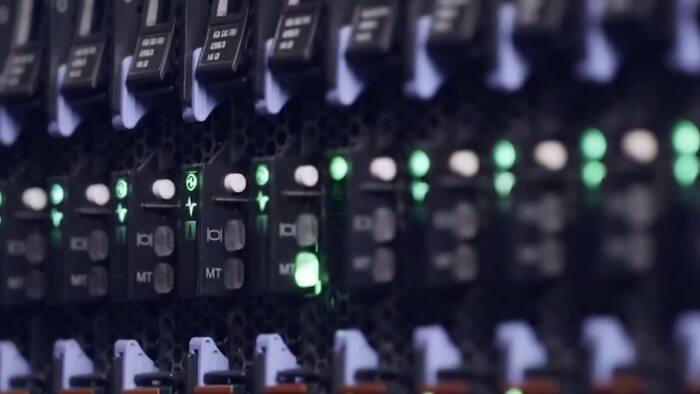
“JPMorganChase has experienced a temporary issue related to a software bug in on-premise hardware systems – there is no evidence this is cyber-related. It is taking longer than usual to service some customers.
“Where we were party to a transaction involving other banks, those banks may have been impacted, but this is not a systemic issue.
“Customers still have access to their accounts and funds.
“We’re working diligently to resolve this by the end of the day today.
While Chase acknowledged that transactions involving other financial institutions may have been affected, the company emphasized that the issue was not systemic."
PNC Bank and U.S. Bank both said their systems were not directly affected, although customers could experience delays involving transactions with other financial institutions.
A PNC spokesperson provided the following statement:
“PNC is not experiencing any direct impact. We are aware of reports of transaction delays outside of the bank, but those appear to be resolving.”
Jeffrey Shelman, senior vice president of enterprise external communication for U.S. Bank, also addressed the issue:
“U.S. Bank systems are not directly impacted. However, clients attempting to send or receive Zelle payments with another financial institution may experience transaction delays.”
Despite reports of delayed payments, Zelle said its network was functioning as expected and pointed to issues at individual financial institutions as a possible explanation.
In a statement, Zelle said:
“Zelle is not down. Zelle is operating as it should. Consumers use Zelle through participating banks and credit unions, which manage their accounts and hold their funds. Consumers do not have a separate Zelle account, and Zelle does not hold consumer funds. An issue at the financial institutions may be delaying Zelle payments for some of their customers. Please contact them directly.”
The company advised customers experiencing payment delays to contact their banks or credit unions directly.
Tim Howard, a cybersecurity expert with Fortify Experts, told KPRC 2 that financial institutions rely on interconnected technology, meaning problems with one service can potentially affect others.
“All these banks are on the same backbone, and you get one service that goes down and it puts a lot more stress on all the other services,” Howard said.
Howard explained that one possible cause of widespread disruptions is a system overload, where infrastructure struggles to handle the demand placed on it.
“They just can’t have enough compute in order to continue to operate,” Howard said.
However, the exact technical cause of the broader reports across financial institutions has not been independently established.
Monday’s banking problems come after several high-profile technology disruptions in recent days.
Last Thursday, Microsoft experienced a service outage affecting products including Outlook and Copilot.
On Friday, the Federal Aviation Administration issued a nationwide ground stop that affected thousands of flights. The FAA attributed the disruption to router issues.
There is no evidence that those incidents are connected to Monday’s banking problems.
By Monday night, Downdetector was showing a significant decline in reported banking outages.
Howard recommends taking precautions in case banking services become temporarily unavailable again.
One recommendation is to keep a small amount of emergency cash available for essential purchases when electronic payment systems are disrupted.
Customers should also enable multifactor authentication on their financial accounts to provide an additional layer of security against unauthorized access.
Anyone experiencing delayed transactions should check directly with their financial institution for updates before attempting duplicate payments.
While Chase said customers continued to have access to their accounts and funds, the incident highlights how disruptions involving financial technology can create complications for customers across multiple institutions.


